During the 1980’s Afghans surprisingly overcame the Soviet Union invasion; however the fate of Afghanistan would have been a gloomy one if not for American assistance. During the late 70’s, the Americans notice a marvelous opportunity to weaken the Soviet Union, and to help the Afghans. This happened when Afghanistan’s communist party came to power and would ask for the Soviets’ help to contain the rebellious movements of the mujahedeen. The Americans would not permit the Soviets to take control of Afghanistan. The determination to cause a Soviet defeat in Afghanistan motivated US government officials to act astutely and swiftly. Due to their covert operations successes, the United States was able to achieve their goals. Even though the local mujahedeen pushed the Soviets back to their own side of the border, the support of the Americans must be credited for the Afghans’ victory. The Americans were the real victors in the Soviet war in Afghanistan.
It all started in the late 70’s, these were years of turmoil in Afghan soil; when the communist party took control of the government and the US’s eyes opened. The United States predicted the Soviets would want to invade in order to prevent revolt against the communist government. This was seen as a perfect opportunity by the Americans to take action in the Middle Eastern country. The American government saw the chance of decreasing the Soviets overwhelming power, contain communism, and help the Afghans, goals that would be worked towards. The motivation to be involved in this possible war led to immediate action escorted by the Jimmy Carter administration. Thus, even before the Soviets invaded Afghanistan, the Americans had organized secret aid for Afghan rebels, and “knowingly increased the probability that they [the Soviets] would” invade Afghanistan (globalresearch.com). Operation Cyclone, the name given to this covert CIA operation, proved effective in 1979’s Christmas Eve, the day Afghanistan was invaded. However, this invasion would not be a walk in the park for anyone involved.
Nonetheless, hearty determination from distinguished individuals in the United States made the whole movement occur. American involvement was vigorously supported by many lawmakers and government officials, such as Charlie Wilson, whose efforts were dedicated to Afghanistan prevailing in this Vietnam-like-war. Former Congressman Charlie Wilson (Texan Democrat) witnessed the atrocities the Soviets had caused the people of Afghanistan when visiting Pakistani aid camps; this made him a noticeable advocate of the Afghans as well as a fierce Anti-Communist. He was extremely influential in Congress; in less than a decade he increased the CIA’s budget “from a few million dollars… to about $750 million”, he also helped convince the Egyptian and Israeli governments in supplying the mujahedeen with modern weaponry that the United States would pay for (Johnson). American advocates opened the doors of victory for the Afghans and closed the doors of USSR optimum efficiency.
As a result, American’s efforts were obviously paid off. Through this movement sponsored by the CIA and financed by Congress, weapons such as AK-47’s and Stinger Missile Systems reached the hands of Afghans fighting for their nation. Hundreds of thousands of weapons were given to the mujahedeen regime and thousands of members of this group were trained for combat. These American-provided mechanisms and training enabled the mujahedeen to overcome the Soviet invasion. The Red Army was effectively defeated, resulting in their retreat on February 15, 1989.
The USSR was also affected greatly by its failure. It lost fifteen thousand troops, but the true damage done was in the degradation of its image, and the billions of dollars it spent during the war. This fall from invincibility and vast expenditure of money to finance the invasion in part caused the USSR to fall apart in the early 1990s (Zhang and Jacobs).
Not only was the USSR put in debt due to the invasion, it was weakened to such an extent that it would dissolve around a decade after the war. The war also made Russians question the efficacy of a Red Army, their imperialistic government. These ideas were motivated by the accounts of the scarred war veterans, and propagated by the media. It is not enough to say that the US promoted the defeat of the Soviets, it undeniably caused it.
Overall, with the right motivation, ardent determination, and precise execution, America’s mission to ensure the mujahedeen’s triumph succeeded. Operation Cyclone was not only ingenious; it was also the largest covert CIA operation in US history. The US’s effort caused the Soviet Invasion to be costly, unproductive, and unwise. Communism was contained, the Soviets were taken out of Afghanistan and the Afghans were liberated war. The American’s victory in this war was one worthy of celebration, given that not one drop of American blood was spilled, neither civilian nor military. All goals that the United States of America wanted to achieve in this war were surpassed, but most importantly, its efforts lead to an Afghan victory. America prevails.
Works Cited
"Soviet-Afghan War." MSN Encyclopedia. 16 Mar 2009 .
"The CIA's "Operation Cyclone"." Rense.com. 16 Mar 2009
.
"The CIA's Intervention in Afghanistan ." Le Nouvel Observateur 15 JAN 1998. GlobalResearch.com. 15 Oct. 2001. 16 Mar 2009 .
Charlie Wilson's War. Dir. Mike Nichols. Perf. Tom Hanks, Julia Roberts. TV. Universal Pictures, 2008.
Johnson, David. "Wilson the Warrior." New York Times. 25 MAY 2003. New York Times. 16 Mar 2009
.
Reuveny, Rafael and Aseem Prakash. “The Afghanistan war and the breakdown of the Soviet Union.” Review of International Studies 1998, 25:693-708. Cambridge University Press. Cambridge Journals. 1999 Shipler, David K.. "Our Vietnam, And the Soviets'." New York Times 15 FEB 1989 16 Mar 2009 .
Stall, John. "Why the Soviet war in Afghanistan failed." Helium. Helium. 16 Mar 2009 .
Zhang, Shou and Mike Jacobs. "The Soviet Invasion of Afghanistan." Dec. 2009. 1 Apr 2009 .
“Yes we can! Yes we can!” chanted the young crowd of Barack Obama in New Hampshire, and they sure can. Young voters across the United States of America are deciding, step by step, who will reside in the White House as president in 2009. Young voters have created electricity in primaries and caucuses so far, demonstrating amazing motivation, creating publicity through their social lives and voting because they have a candidate to vote for.
Young Voters in Democratic Primaries of 2008 Young voters all over the country have played an imperative role so far in the process of electing a nominee for each party, especially in the Democratic Party. Since the first day of Democratic primaries on January 2, fresh voters in Iowa went up to the stands and voted, making up 22% of the popular vote in the state (“Entrance”). But Iowa was not a one time thing; it has happened almost constantly. 16% of California’s vote, 17% of Utah’s vote, and 13% of New Jersey’s vote was made up of voters 18 through 29 (“Results: Utah”, “Results: California”, “Results: New Jersey”). Not only has the new generation of voters made its presence felt, their vote has been decisive in critical moments, especially in favor of Senator Barack Obama. Obama has depended on new voters as his main source of ballots. He has had victories during these primaries with exceptionally close margins because of his popularity with young Americans. Missouri, a state known for getting the president they want, was won by Senator Obama by 1%. If 65% of voters 18-29 years old would not have voted for Barack, then the up-runner, Hillary Clinton, would have won by a great margin (“Exit Polls: Missouri”). Barack’s base of polling is black people, wealthy and educated voters, and college students (“Political”). In Wisconsin’s primaries on February 19th, Barack won the state 58% to Hillary’s 41%. Exit polls of this state affirm that 20% of the respondents 18-49 years old voted for Obama (“Exit Polls: Wisconsin”, “Results: Wisconsin”). Barack has depended amazingly of his young followers and they have clearly not let him down.
Obama Support Barack Obama is evidently popular within young voters and he should be. Barack Obama is a fresh face proposing a change in American government; he is the youngest candidate in the race, and his rhetoric is inspiring and convincing (“Democratic”). A main reason Obama is popular with the young crowd is because he is new. He is not a Clinton or a Bush, who have dominated the White House for the last 20 years; this would be 24-28 years if Hillary wins the election (“List”). Obama is offering a new type of way in which things will get done in Washington; he often criticizes Washington’s lack of solution (Texas). “It's a game where Democrats and Republicans fail to come together year after year after year, while another mother goes without health care for her sick child. That's why we have to put an end to the division and distraction in Washington, so that we can unite this nation around a common purpose, a higher purpose,” Obama told the crowd in Madison, Wisconsin on Potomac Night, “Because at a time when so many people are struggling to keep up with soaring costs in a sluggish economy, we know that the status quo in Washington just won't do. Not this time. Not this year. We can't keep playing the same Washington game with the same Washington players and expect a different result – because it's a game that ordinary Americans are losing.” (Obama). Young people were not old enough to fully appreciate Bill Clinton’s presidency, especially people between ages of 18-29 who were practically teenagers or younger during his time. Young voters have seen the negative influence of the Bush Administration and want a change in Washington, not only a change of president, but a change of the “status quo” in American government, as Barack says. Young voters feel he is running a clean campaign compared to other candidates, no typical dirty tricks such as fake scandals regarding other candidates; this gives him an honest appearance (Gray 78-80). Since Hillary has been in the White House before, as First Lady, people do not see her as a person who will change Washington much, whereas Obama clearly speaks his mind on Washington’s way of solving the country’s conflicts. Young voters can also identify Barack because he is the youngest candidate, just like JFK was, meaning he has spent less time in ‘Washington’s game’; nonetheless he has fought for change in the years he has (Obama, “Democratic”, Boller 296). Young people may like Hillary but she is not really new or fresh. “I love Hillary Clinton, I’m a democrat, I think she’s wonderful, but I don’t want to go backwards to go forwards,” says young Katerina Graham (“Yes, We Can”). In the Texas Democratic Debate a question was addressed to the candidates that asked their opinion on spending & secrecy, especially because of Obama’s and Clinton’s criticism of how the Bush Administration organizes this. Obama’s response was, “…I believe very strongly in transparency... One of the things I did last year was to pass a bill with Tom Coburn… we got together and created what is called Google for Government, it’s a searchable database where every single dollar of federal spending is posted on the internet… the idea is to open up the process so that the American people can make judgments about whether or not the government is doing what they are supposed to be doing with its tax payer money…” (“Hillary”, Texas). This is a clear statement in which Obama proves he wants change; he does not want secrecy, he wants transparency. Obama’s thoughts on the war in Iraq are extremely clear; he has been against it since the beginning, another difference from Washington politicians. During the Texas Debate there were many issues to discuss, such as Iraq, America’s transparency, and the candidates opinion on immigration, after all the United States is called “a nation of immigrants.” (Sullivan 98). During the debate Campbell Brown, a mediator of the debate, asked Obama what he thought of the war: “…you were also opposed to it (war in Iraq) since the beginning, were you wrong (about it)?” She proves that Obama was against the war since the beginning. (“Hillary”, Texas). So even if Barack is a dozen years more inexperienced than some of the other candidates, his ethics and standards have proven themselves worthy of voters’ ballots and solid enough to be ‘president-material’. Yet, the reason why millions of young voters have turned to Obama as their favorite candidate is his amazing rhetoric. Young adults are inspired to vote for Barack because his words show he means what he says. His emotions while speaking are true; he really wants change and he does believe he can bring it to the people. His most admired speech is the speech he gave in Nashua, New Hampshire. He improvised magnificently; his words were inspiring to all of its listeners. He spoke of American hope: “…we’ve been warned against offering the people of this nation false hope, but in the unlikely story that is America, there has never been anything false about hope.” He spoke of American achievements, “…a President who chose the moon as our new frontier.” Spoke about how American people can do anything, “…it was whispered by slaves and abolitionists as they blazed the trail toward freedom through the darkest of nights. Yes, we can.” (“Barack Obama: Yes We Can”) A song produced by Will.I.Am, a member of the band, Black Eyed Peas, was inspired by this speech. He got a group of approximately forty artists to sing and appear in the video of the song inspired entirely by the speech. “…instead of putting it in the hands of profit we put it in the hands of inspiration....” says Will.I.Am on his song. All of the artists just started coming up to him or calling him telling him they wanted to take part of the song and then ‘magic happened’ (“Yes, We Can”). Another aspect of Barack’s popularity rises from the Kennedy family endorsement. The Kennedy family endorsement has convinced young voters that Obama is the right candidate. Barack has many things in common with JFK, they were both the youngest candidates for president and they both spoke about the public interest, rather than themselves or other candidates (Boller 296-299). “…I think each of us, women and men and children, deserve the best candidate and the best president and in my mind there’s no question that that’s Barack Obama,” says Vicki Kennedy (“Yes, We Can”). Someone else who endorsed Obama was Edward Kennedy, JFK’s brother. He spoke of how he was endorsing the candidate who inspired him and the rest of the country and how the country needed a new generation of leadership (Levs). Even though the Kennedys are not new to Washington, they still represent change and they know that a young candidate, like Obama, can be a great president. When the youth of America hears this from one of the greatest president’s brother, they agree it is time for a new generation of politics, their generation of politics. Obama is more than inspiration to young people; he is a change all people can believe in. Young people support him and want him to be president because in their perspective he will be the next best president; he will be the next John F. Kennedy.
Gaining Support for a Candidate Social networks facilitate the new generation of voters to gain support for a candidate. Social networks have an immense quantity of youth taking part of their site. Websites such as Facebook, MySpace and YouTube enable campaign publicity. Much of this publicity is coming from young voters who want to gain support for a candidate. Facebook allows users to join groups, add applications to their profile or support teams and people. This website has permitted users to support presidential candidates, thus Facebook has around a million users who have declared their support for a candidate. Barack Obama has 658, 252 supporters, making him the candidate with the most supporters in Facebook (“Barack Obama”). Hillary Clinton has 126, 634 supporters and John McCain has 78, 405 supporters (“Hillary Clinton”, “John McCain”). In MySpace you can create your own profile, post pictures, data, add friends and comment people. Like Facebook, MySpace has a lot of participation in demonstrating endorsements from users. Young MySpace users show their support to candidates by adding their favorite candidate as a friend and writing supportive comments to them. Again, Barack Obama has the largest amount of supporters, or in this case, friends; 306, 107 (“MySpace - Barack Obama”).Hillary has 187, 606 friends and John McCain has 46,860 friends (“MySpace - John McCain”, “MySpace - Hillary Clinton”). Again young men and women are taking part of these elections, increasing popularity and showing support for a candidate. YouTube is a website on which you can post videos. Young people today love YouTube; it is currently one of the most popular websites. Thousands of videos related to the presidential elections have been posted. Barack Obama has supportive videos such as the ‘Yes, We Can’ song by Will.I.Am which has had 5,420,382 views since it was posted on YouTube (“Yes We Can - Barack Obama Music Video”). Obama also has comedic videos posted about him such as the video known as ‘Obama Girl’ which has 6, 708, 229 views (“I Got a Crush...”). Hillary Clinton has popular supportive videos on YouTube such as Jack Nicholson’s endorsement ad; in one day of being posted it had 44, 892 views (“Jack”). Videos of celebrities endorsing candidates are extremely popular with young viewers, so are comical videos that raise awareness while they entertain viewers.
Conclusion Young voters will be the deciding factor in the American presidential elections of 2008. They will keep voting in masses never seen before in primary history, having Obama grasp the democratic nomination. They will keep increasing his support through social networks so that in the general elections millions of young voters will dedicate their ballot to Barack. He will reside in the White House as the United States’ president by 2009.
NOTE TO READERS: Not all the numbers, statistics and events may remain the same, all of these were recorded during early months of 2008 and have not been updated. This is an article written during March for the future but has not been published until the 30 of August, 2008.
Works Cited
""I Got a Crush...On Obama" By Obama Girl." YouTube. 13 June 2007. YouTube, LLC. 2 Mar 2008 . "Barack Obama." Facebook. Facebook 2008 . 2 Mar 2008 . "Barack Obama: Yes We Can." YouTube. 09 Jan 2008. YouTube, LLC.. 9 Mar 2008 . Boller, Jr., Paul F.. Presidential Campaigns. New York City: Oxford University Press, Inc., 1985. "Democratic Presidential Candidates." US Politic's Guide. 26 Feb 2008 . "Entrance Polls: Iowa." CNNPolitics.com. 2 Jan 2008. CNN. 18 Feb 2008 . "Exit Polls: Missouri." CNNPolitics.com. 1 Feb 2008. CNN. 18 Feb 2008 . "Exit Polls: Wisconsin." CNNPolitics.com. February 19 2008. CNN. 26 Feb 2008 http://www.cnn.com/ELECTION/2008/primaries/results/epolls/#WIDEM Gray, Lee Learner. How We Choose A President. Fifth Edition. New York: St. Martin's Press, 1980. "Hillary Clinton." Facebook. Facebook 2008 . 2 Mar 2008 . Hillary Clinton vs Barack Obama Texas Debate part.10 . Dir. VOTERSTHINKdotORG. Perf. Barack Obama, Hillary Clinton, John King, Cambell Brown. Internet Video. YouTube, 21 Feb 2008. "Jack Nicholson's Hillary Clinton Ad ." YouTube. 13 June 2007. YouTube, LLC. 2 Mar 2008 . "John McCain." Facebook. Facebook 2008 . 2 Mar 2008 . Levs, Josh. "Kennedy: 'It's time now for Barack Obama'." CNNPolitics.com. 28 Jan 2008. CNN. 28 Feb 2008 . "List of Presidents of the United States of America." Wikipedia. 18 Feb 2008. Wikimedia Foundation, Inc.. 26 Feb 2008 . "MySpace - Barack Obama." MySpace. 2003-2008 MySpace.com. 2 Mar 2008 . "MySpace - Hillary Clinton." MySpace. 2003-2008 MySpace.com. 2 Mar 2008 . "MySpace - John McCain." MySpace. 2003-2008 MySpace.com. 2 Mar 2008 . Obama, Barack. "Remarks of Senator Barack Obama: Potomac Primary Night." Obama '08. 12 Feb 2008. Obama for America. 28 Feb 2008 "Political Ticker." CNNPolitics.com. 19 Feb 2008. CNN. 19 Feb 2008 . "Results: California." CNNPolitics.com. 14 Feb 2008. CNN. 18 Feb 2008 . "Results: New Jersey." CNNPolitics.com. 14 Feb 2008. CNN. 18 Feb 2008 . "Results: Utah." CNNPolitics.com. 14 Feb 2008. CNN. 18 Feb 2008 . "Results: Wisconsin." CNNPolitics.com. February 25 2008. CNN. 26 Feb 2008 .. Sulllivan, Teresa. "United States."World Book Encyclopedia. 2006 ed. Texas Democratic Debate. Per. Barack Obama, Per. Hillary Clinton, Per. John King, Per. Cambell Brown. CNN, Austin, Texas. 21 Feb 2008. "Yes We Can - Barack Obama Music Video." YouTube. YouTube, LLC. 2 Mar 2008 . "Yes, We Can." Dipdive. Dipdive LLC. 28 Feb 2008 .
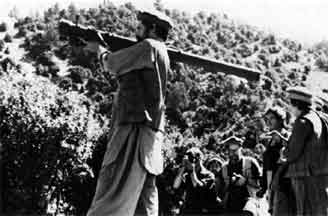
 He was extremely influential in Congress; in less than a decade he increased the CIA’s budget “from a few million dollars… to about $750 million”, he also helped convince the Egyptian and Israeli governments in supplying the mujahedeen with modern weaponry that the United States would pay for (Johnson). American advocates opened the doors of victory for the Afghans and closed the doors of USSR optimum efficiency.


